
Blog
Undertone Test Lighting: How to Check Your Skin Tone
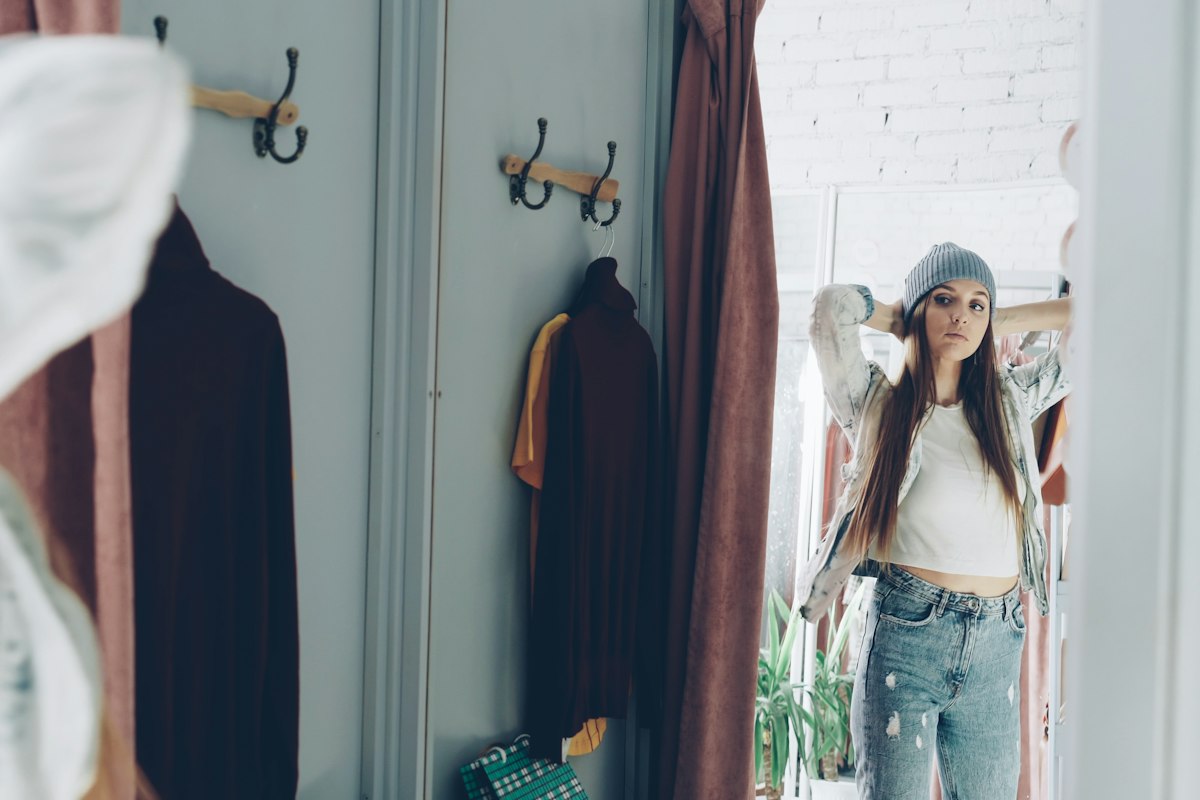
To test your undertone accurately, do it by a window in soft, indirect daylight, without makeup. Artificial light changes how your skin reads, so the same face can look warm in one room and cool in another.
Your undertone does not change from room to room. Only what you see changes, which is why many people end up with conflicting results from different tests.
Why light changes your result
Skin reflects the colour of the light that hits it. A warm bulb adds yellow and orange, so skin can read warmer and fabrics look more golden. Some cool or "daylight" LEDs add blue-grey, so skin can look paler or pinker than it is. Coloured walls, a bright sofa or a green plant nearby can also bounce a tint onto your face.
That is why a test that works well in daylight can give a different answer under your bathroom light.
The best light for a test
- A window with soft daylight. Indirect light, with no hard sun on your face. A window that does not get direct sun is ideal.
- Late morning to early afternoon. Early and late in the day, daylight itself turns warm.
- Neutral surroundings. Stand near a white or light grey wall and keep brightly coloured objects out of view.
- No makeup and no filters. Foundation, blush and camera filters all hide the signal you are looking for.
Lighting to avoid
| Light | What it does | Good for testing? |
|---|---|---|
| Soft window daylight | Closest to neutral | Yes |
| Warm bulbs and candles | Adds yellow and orange | No |
| Cool LED or office light | Can add blue-grey | No |
| Direct sun | Harsh shadows, bleached colours | Not ideal |
| Phone flash | Flattens skin, shifts colour | No |
How to test, step by step
- Choose your window, and wipe the area clean of strong colours behind you.
- Pull your hair back and wash off makeup.
- Take the test (veins, jewelry, white paper or fabric) in this spot, always the same one.
- Repeat each test at least twice, ideally on different days.
- Write down each result before you compare, so you are not nudged by the first answer.
For the tests themselves, see how to find your undertone.
Phone photos: fix the settings
If you test with photos, compare them fairly.
- Use the same spot and time for every photo.
- Lock exposure and white balance if your camera allows it (on many phones you can press and hold on the screen). Otherwise the phone silently recolours each shot.
- Put your swatches in the same frame. If you compare two colours, photograph them together, not in two separate pictures.
- Skip beauty modes. They smooth and recolour skin.
Draping with fabric
Draping is the most informative test when light is controlled. Hold plain, solid-colour fabrics or tops under your chin, one at a time, in the same window light.
- Compare a warm shade with a cool one: for example Terracotta with Navy.
- Look for the one that makes your face look rested and even, not the one that makes you look grey, yellow or shadowed.
- Look at your skin, not the clothes. If the colour wins your eye first, it is probably too strong.
If your results still disagree
Conflicting results are normal, and they are information. Many people sit between two undertones, and olive skin often reads as warm in one test and neutral in another. Count the tests that agree: three out of five pointing the same way is a likely answer. If you suspect an olive undertone, read our olive undertone guide. For the full picture of warm, cool, neutral and olive, see the undertone guide.
Check your undertone with Kittyfit
Kittyfit asks a short quiz and, if you choose, a face and wrist photo, which is analysed on your iPhone. It then scores clothes and jewelry against your result, and the virtual try-on is optional. Even with an app, good light still helps, so take the photo by a window. Learn more about Kittyfit.
Frequently asked questions
What is the best light for an undertone test?
Soft, indirect daylight from a window, without direct sun and without colored walls nearby. Late morning on an overcast day works well.
Can I test my undertone under a lamp or bathroom light?
It is not reliable. Warm bulbs add yellow and some cool LEDs add blue-grey, so the same face can read as a different undertone.
Why do my phone photos look warmer or cooler than real life?
Phones adjust white balance automatically for each scene. Locking exposure and white balance, or using the same spot every time, keeps photos comparable.
Does my undertone really change with light?
No. Your undertone stays the same. What changes is how the light reflects off your skin and what you see, which is why the test setup matters.
General style guidance based on common color-analysis practice, not medical or dermatological advice. Results vary with lighting, device and the individual.