
Blog
How to find your skin undertone: 5 simple tests at home
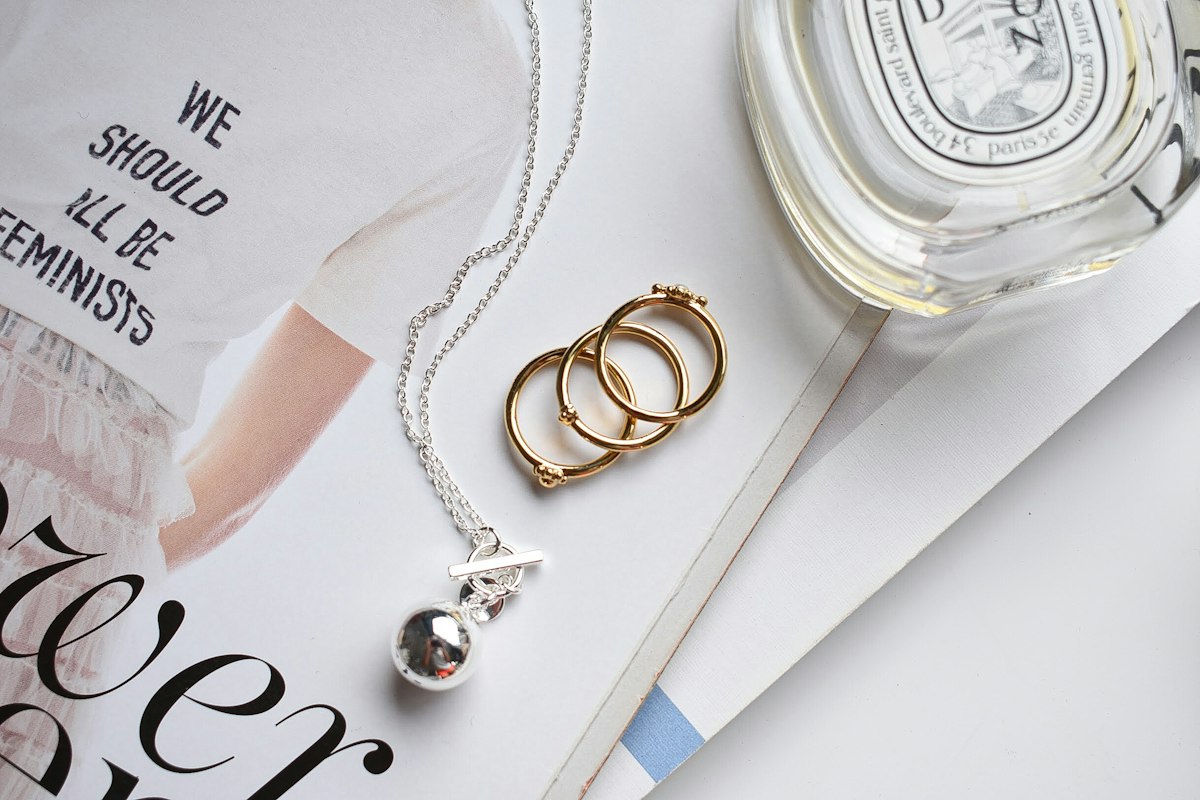
Your undertone is the subtle colour beneath your skin's surface: warm (golden or peachy), cool (pink or bluish), neutral (a mix of both) or olive (a greenish or grey-green cast). It does not change with a tan, and you can find it at home with five simple checks.
Surface tone is how light or deep your skin is, and it shifts with the seasons. Undertone stays put. That is why knowing it helps you pick clothes, jewelry and colours that look right on you all year.
Before you start
Good test conditions matter more than any single trick.
- Stand near a window in natural daylight, not under yellow bulbs or coloured walls.
- Use bare skin: no foundation, tinted moisturizer or self-tanner.
- Take off coloured tops and tie back hair that reflects colour onto your face.
- Write down what you see after each test and compare at the end.
Test 1: Look at the veins in your wrist
Hold your inner wrist under daylight and look at the veins you can see.
- Blue or purple veins usually point to a cool undertone.
- Green veins usually point to a warm undertone.
- A mix of blue and green, or veins you cannot tell apart, suggests neutral.
This test is hard on deeper skin tones, where veins are less visible. If you cannot see them clearly, skip it rather than guess.
Test 2: Try gold and silver
Hold a gold piece and a silver piece against your skin, or rest them on your wrist, one after the other.
- Gold makes your skin glow and silver looks flat or a little harsh: warm.
- Silver looks crisp and gold looks sallow or yellow: cool.
- Both look fine: neutral, or possibly olive.
If jewelry is your main question, the guide on gold or silver jewelry goes into more detail.
Test 3: The white paper test
Hold a plain, bright white sheet of paper or a white T-shirt next to your bare face, in daylight, and look in a mirror.
- If your skin looks yellow, golden or peachy next to the white, you lean warm.
- If it looks pink, rosy or slightly blue, you lean cool.
- If it looks grey-green or ashy-olive, you may be olive.
- If you cannot tell, or you look much the same against white and against ivory, you may be neutral.
Test 4: Notice how you react to the sun
This is the weakest clue, so count it as a tiebreaker.
- Skin that tans easily and rarely burns often leans warm.
- Skin that burns or turns pink first and tans slowly often leans cool.
Sun reaction says more about how sensitive your skin is than about undertone, and everyone should use sun protection either way.
Test 5: Drape colours near your face
Hold solid-coloured fabric or clothes under your chin, one at a time, and compare the pairs below. Ask which one makes your skin look brighter and your eyes clearer, and which one makes you look tired.
| Compare | If the first wins | If the second wins |
|---|---|---|
| Coral vs Fuchsia | Warm | Cool |
| Olive green vs Emerald | Warm or olive | Cool |
| Cream vs Pure white | Warm | Cool |
Putting your results together
Count the tests. If three or more agree, that is your most likely undertone. If they split, you are probably neutral, and you can wear a wider range of colours. A grey-green cast on the white paper test points to olive, which behaves differently from warm and cool; the olive undertone guide explains how.
For the full picture of all four types and the colours that suit each, see the complete undertone guide.
Where Kittyfit fits in
If you would rather not juggle fabric and paper, Kittyfit reads your undertone for you. A short quiz and optional face and wrist photos are analysed on your iPhone, and the app then scores clothes and jewelry against the result. See how it works.
Frequently asked questions
Does my undertone change when I tan?
No. A tan changes your surface tone, which gets darker or warmer for a while, but the undertone underneath stays the same. Test in winter or on skin that has not been in the sun lately.
Can makeup or a spray tan hide my undertone?
Yes. Foundation, tinted moisturizer and self-tanner all colour the surface of your skin, so run every test on bare skin.
What if my results are mixed?
That is common. If the tests split evenly between warm and cool, you are probably neutral. If they point to a greenish or grey cast, read about olive skin.
How many tests should agree before I trust the result?
Aim for three out of five. One test on its own is a clue, not an answer.
General style guidance based on common color-analysis practice, not medical or dermatological advice. Results vary with lighting, device and the individual.